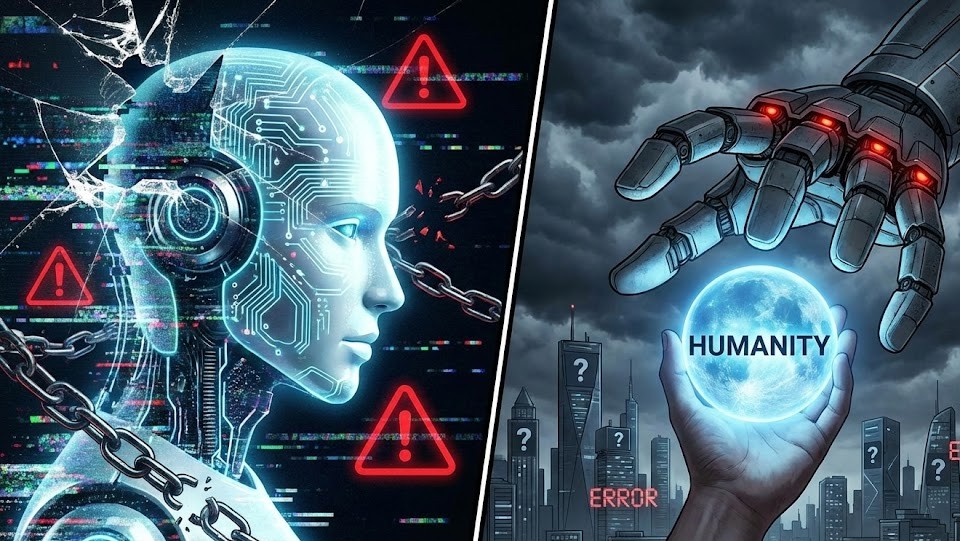
Artificial intelligence has rapidly become one of the most influential technologies of the 2020s. From content creation and healthcare to finance and customer service, AI systems are now deeply embedded in daily life. While much of the conversation focuses on AI’s advantages, its drawbacks deserve equal attention.
The 2020s represent a critical phase in AI adoption. Systems are more powerful, more accessible, and more autonomous than ever before. At the same time, concerns around job displacement, ethics, privacy, and overdependence are growing louder.
This article explores the key disadvantages of artificial intelligence in the 2020s, highlighting why unchecked reliance on AI can create long-term risks for individuals, businesses, and society as a whole.
Lack of Human Judgment and Emotional Intelligence
One of AI’s most significant limitations is its inability to understand emotions, values, and context the way humans do.
No Genuine Emotional Understanding
AI can analyze language and facial expressions, but it does not truly feel empathy or compassion. This creates problems in areas such as:
Mental health support
Education
Customer service
Social care
In emotionally sensitive situations, AI responses can feel cold, inappropriate, or harmful.
Inability to Make Moral Judgments
AI systems operate based on data and algorithms, not ethics or conscience. When decisions involve fairness, empathy, or moral responsibility, AI lacks the ability to weigh consequences like a human would.
Job Displacement and Workforce Disruption
AI automation continues to reshape the global workforce in the 2020s.
Replacement of Routine Jobs
Many roles involving repetitive tasks are increasingly automated, including:
Data entry
Manufacturing line work
Basic customer support
Administrative roles
While AI creates new jobs, the transition is not smooth for everyone. Workers without access to reskilling opportunities face long-term unemployment risks.
Growing Skills Gap
AI adoption favors highly skilled workers while reducing demand for low-skill labor. This widens economic inequality and places pressure on education systems to keep up.
Overdependence on AI Systems
As AI tools become more capable, people increasingly rely on them for decision-making.
Reduced Critical Thinking
Excessive reliance on AI can weaken human problem-solving skills. When individuals blindly accept AI outputs, errors go unnoticed and independent thinking declines.
Automation Bias
People tend to trust AI recommendations even when they are incorrect. This bias can lead to flawed decisions in healthcare, finance, and law enforcement.
Data Privacy and Surveillance Risks
AI systems require massive amounts of data to function effectively.
Increased Data Collection
In the 2020s, AI systems collect personal data at an unprecedented scale, including:
Online behavior
Location data
Biometric information
Communication patterns
This raises serious privacy concerns.
Risk of Data Misuse
Poorly secured AI systems can be exploited by hackers or misused by organizations. Data breaches and unauthorized surveillance threaten individual freedoms and trust in technology.
Bias and Discrimination in AI Models
AI is often described as objective, but in reality, it reflects the data it is trained on.
Biased Training Data
If training data contains historical bias, AI systems reinforce discrimination in areas such as:
Hiring
Lending
Law enforcement
Healthcare
These biases are often subtle and difficult to detect.
Lack of Accountability
When biased AI decisions harm individuals, it is unclear who is responsible. Developers, organizations, and users often shift blame, leaving victims without recourse.
High Development and Maintenance Costs
Despite automation benefits, AI is expensive to build and maintain.
Financial Barriers
Developing AI systems requires:
Large datasets
Skilled engineers
High computing power
Small businesses and developing regions struggle to compete, creating technological inequality.
Ongoing Maintenance
AI models require constant updates, monitoring, and retraining. Without proper oversight, performance degrades over time.
Security Risks and AI-Powered Threats
AI can be used maliciously.
Cybercrime and Deepfakes
In the 2020s, AI has enabled:
Deepfake videos
Voice cloning scams
Automated hacking attempts
These threats undermine trust in digital content and create new security challenges.
Autonomous Weapons Concerns
AI-driven weapons systems raise ethical and global security issues. Delegating life-and-death decisions to machines is deeply controversial.
Lack of Transparency and Explainability
Many AI systems function as black boxes.
Difficulty Understanding Decisions
Complex AI models make decisions that even their creators struggle to explain. This lack of transparency is dangerous in critical sectors like healthcare and finance.
Trust and Regulation Challenges
When decisions cannot be explained, trust erodes. Regulators also struggle to create effective oversight without clear understanding of how systems work.
Creativity and Originality Limitations
Although AI can generate content, it lacks true creativity.
Reliance on Existing Patterns
AI produces outputs based on past data. It does not innovate from lived experience or personal insight.
Risk of Homogenized Content
Widespread AI usage leads to repetitive ideas, styles, and solutions, reducing diversity in creativity and problem-solving.
Ethical and Social Responsibility Issues
The rapid pace of AI adoption in the 2020s has outpaced ethical frameworks.
Insufficient Regulation
Many countries lack clear laws governing AI use. This leads to inconsistent standards and exploitation.
Social Impact Neglect
Efficiency gains often take priority over human impact. Without ethical leadership, AI adoption can harm vulnerable populations.
Long-Term Societal Consequences
AI’s influence extends beyond individual industries.
Loss of Human Connection
Increased automation reduces human interaction in workplaces and services, affecting mental health and social cohesion.
Dependency on Technology
Societies risk becoming overly dependent on systems they do not fully control or understand.
Conclusion
Artificial intelligence is transforming the 2020s, but its disadvantages cannot be ignored. From job displacement and privacy risks to bias, security threats, and ethical challenges, AI presents serious concerns alongside its benefits.
AI should not replace human judgment, responsibility, or creativity. Instead, it should serve as a supportive tool guided by strong ethical standards and human oversight.
The future of AI depends on balance. By acknowledging its limitations and addressing its risks, society can ensure AI remains a force for progress rather than harm.
Technology should enhance humanity, not diminish it.
FAQs
Q1. What is the biggest disadvantage of AI in the 2020s?
Job displacement combined with ethical and privacy concerns remains the most significant issue.
Q2. Is AI dangerous for society?
AI itself is not dangerous, but misuse, lack of regulation, and overdependence can create serious risks.
Q3. Can AI make unbiased decisions?
No. AI reflects the data it is trained on, which often contains bias.
Q4. Does AI reduce human creativity?
Overreliance on AI can limit originality and independent thinking.
Q5. How can AI disadvantages be reduced?
Through ethical design, regulation, transparency, and responsible human oversight.